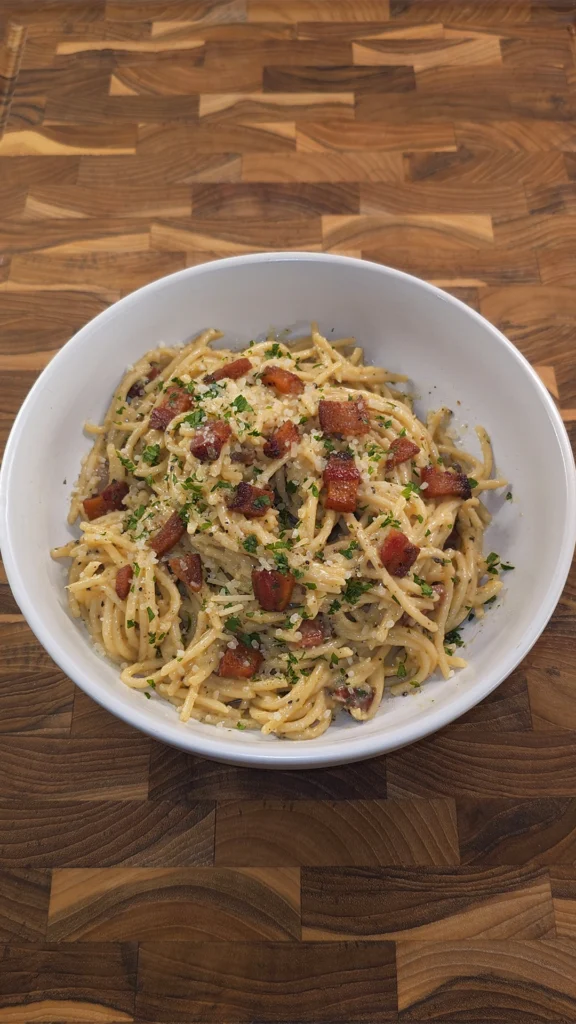

When it comes to comfort food that feels fancy but cooks faster than your takeout, Spaghetti Carbonara is my cheat code. Picture this: silky, rich pasta cloaked in a sauce so decadent and yet so simple—no cream, no garlic, no drama. I first learned about Carbonara in Italy while I was visiting Rome as a kid. Ever since, it’s been a go-to quick dinner that feels like a cozy Roman getaway (even when I’m just burning rice in Austin).
The magic of Carbonara lies in its simplicity: a rich, velvety sauce formed from eggs, cheese, guanciale, and black pepper, all brought together with perfectly al dente spaghetti and a splash of starchy pasta water. That’s it. But when done right? It tastes like the warm hug of an Italian grandma who knows her way around a Roman kitchen.
Carbonara—An Authentic Roman Classic.
Yes, yes, Carbonara is the real deal—straight out of Rome (Lazio, specifically). Not to be confused with American cream-filled imitators, true Carbonara is built on guanciale, egg, cheese, and black pepper.
The origins of Carbonara trace back to mid-20th century Rome, though its precise beginnings are still debated. Some say it was inspired by coal miners (“carbonari”) who whipped it up over campfires. Others claim it emerged post-WWII when American troops brought bacon and eggs to Italy. Whatever the history, what we do know is that Carbonara has become a global classic, loved for its bold yet balanced flavors and its creamy, indulgent texture—all without the use of cream.
Let’s walk through how to make this timeless Italian masterpiece, step by step.
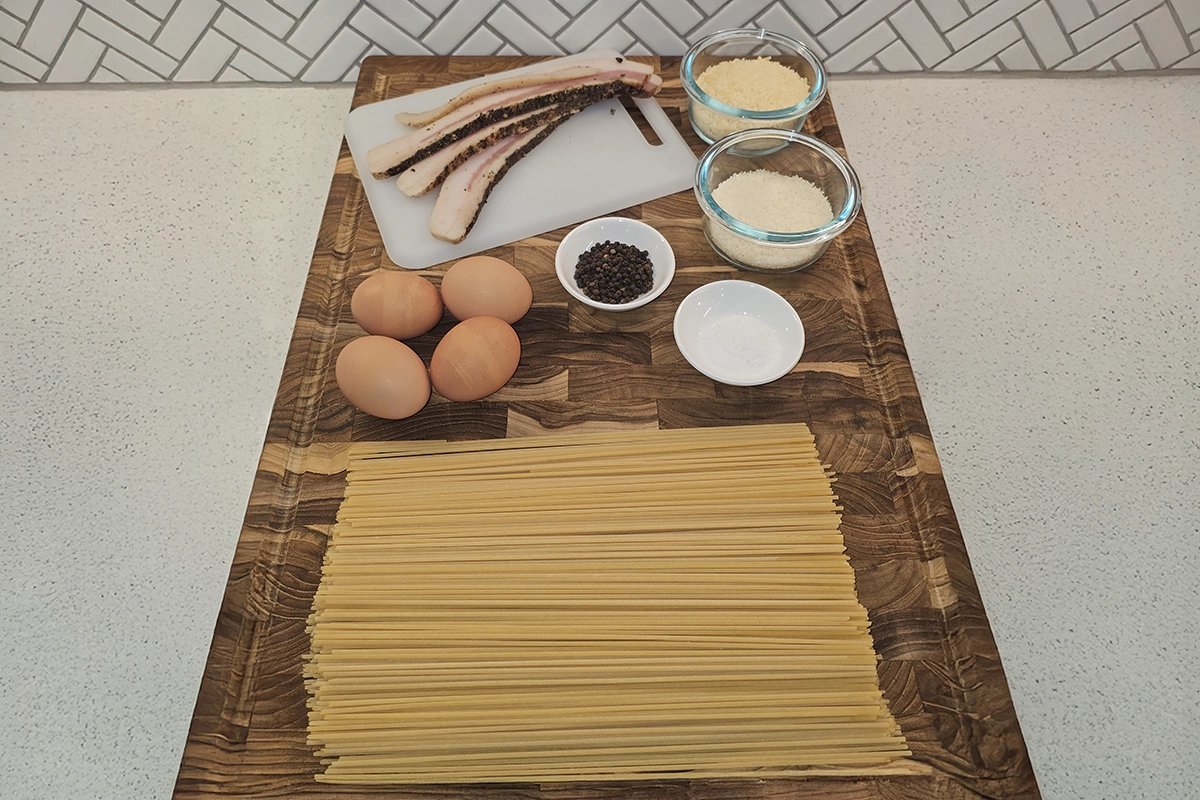
Carbonara Ingredients
Refer to the recipe card for the full list of ingredients and measurements!
- Guanciale – The hero! Rich, cured pork jowl with fatty flavor diced into thick cubes. Pancetta or bacon works as a substitute, but guanciale is next-level.
- Black peppercorns – Adds spice and aroma. Don’t rely on pre-ground—go fresh!
- Eggs – The backbone of creamy sauce.
- Parmigiano Reggiano & Pecorino Romano – A cheese duo that packs umami, salty creaminess.
- Spaghetti – The classic long noodle; pick high-quality durum wheat for the best texture.
- Pasta water – Liquid starchy gold that transforms sauce consistency.
- Parsley – Optional, but it can add a little color and pop to your plating aesthetic.
Carbonara Notes and Tips
- Use a cold pan: Don’t turn up the heat just yet. Avoid burning your guanciale by starting with a cold pan.
- Guanciale is key: Nothing outshines the star of the dish, but pancetta or thick-cut bacon can be subbed in a pinch.
- Use quality cheese: Freshly grated is best. Pre-shredded won’t melt the same.
- Save your pasta water: That stuff is essential. Don’t forget it.
- Use room temperature eggs: Cold eggs will not create the right consistency for the sauce.
- Whisk the eggs & cheese ahead of time: Having the sauce mixture prepared saves time when you need to move fast when heating things up.
- Crack fresh pepper: You’ll notice the difference in taste when using freshly cracked black peppercorns.
- Add pasta water slowly: If you want to achieve a glossy, clingy sauce, keep mixing your pasta water in steadily.
- Watch the heat on your pan when mixing your sauce ingredients with the pasta. Take the skillet off the flame and keep it at a low temperature so that it is hot enough to melt your sauce, but not scramble your eggs.
How to Make Spaghetti Carbonara in 6 Simple Steps
- Render the guanciale
- Cook the pasta
- Toast and crush the peppercorns
- Prepare the sauce
- Marry the pasta and sauce
- Plate and garnish
The secret to getting that silky, rich Carbonara lies in the sauce, crafted from eggs, Parmigiano Reggiano, Pecorino, and a splash of starchy pasta water. No cream is needed—just quality cheese, cracked black pepper, and the residual heat of the pasta that brings it all together like magic.
Carbonara Step-By-Step Recipe Instructions
1. Render The Guanciale
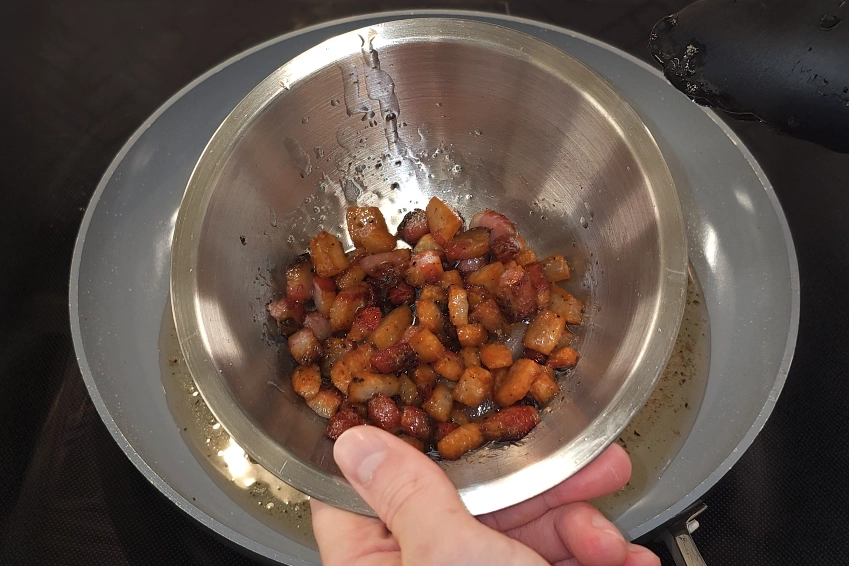
Depending on your preference, dice your guanciale into 1/4-inch cubes or 1.5-inch strips. Next, start cold – place the diced guanciale into a cold pan. That’s right, no preheating here. A cold pan means gradual fat rendering. Slowly heat to medium-low and render for 8-10 minutes, or until the edges are crispy and golden, but have a nice soft and chewy interior consistency. Take the guanciale out of the pan, cover, and set aside to keep warm for later. To save time, cook your pasta while you are rendering your guanciale.
If there is too much fat preventing the guanciale from crisping, drain off some of the extra fat and save it for later. Remove those little bites of goodness and save for later. Do NOT throw away the fat! This liquid gold will help create the sauce. If you took any fat out previously during the cooking process, add it back to the pan. Keep the pan on minimal heat for later – just enough to keep the fat warm and prevent it from solidifying.
2. Cook The Pasta
While you are rendering the guanciale, add a large pinch of salt to a large pot of water and bring to a boil. Once boiling, add your spaghetti. Cook just shy of al dente, and reserve 2/3 cup pasta water for the sauce. Then, drain your pasta and toss it in the pan of warm guanciale fat you saved earlier. While the pasta is cooking follow steps 3-4.
3. Toast and Crush The Peppercorns
Toss the whole peppercorns into a small pan over low heat. Stir 30–60 seconds until fragrant. Remove the peppercorns, and using a mortar and pestle, grind the peppercorns into a coarse powder. Set aside for later.
If you don’t have a mortar and pestle, you can crush the peppercorns between a sheet of parchment paper using a rolling pin. Or, if you’re feeling a little barbaric and need to blow off some steam, throw them in a re-sealable plastic bag and crush them by repeatedly slamming a heavy object on them! You get the idea.
4. Prepare The Egg-Cheese Mixture
In a small mixing bowl, whisk the eggs, yolks, Parmigiano Reggiano, Pecorino Romano, crushed black pepper, and a pinch of salt together using a fork until the mixture reaches a smooth, thick consistency. The finer you grate your cheese, the smoother the consistency will be. Aim for very finely grated cheese (think powder).
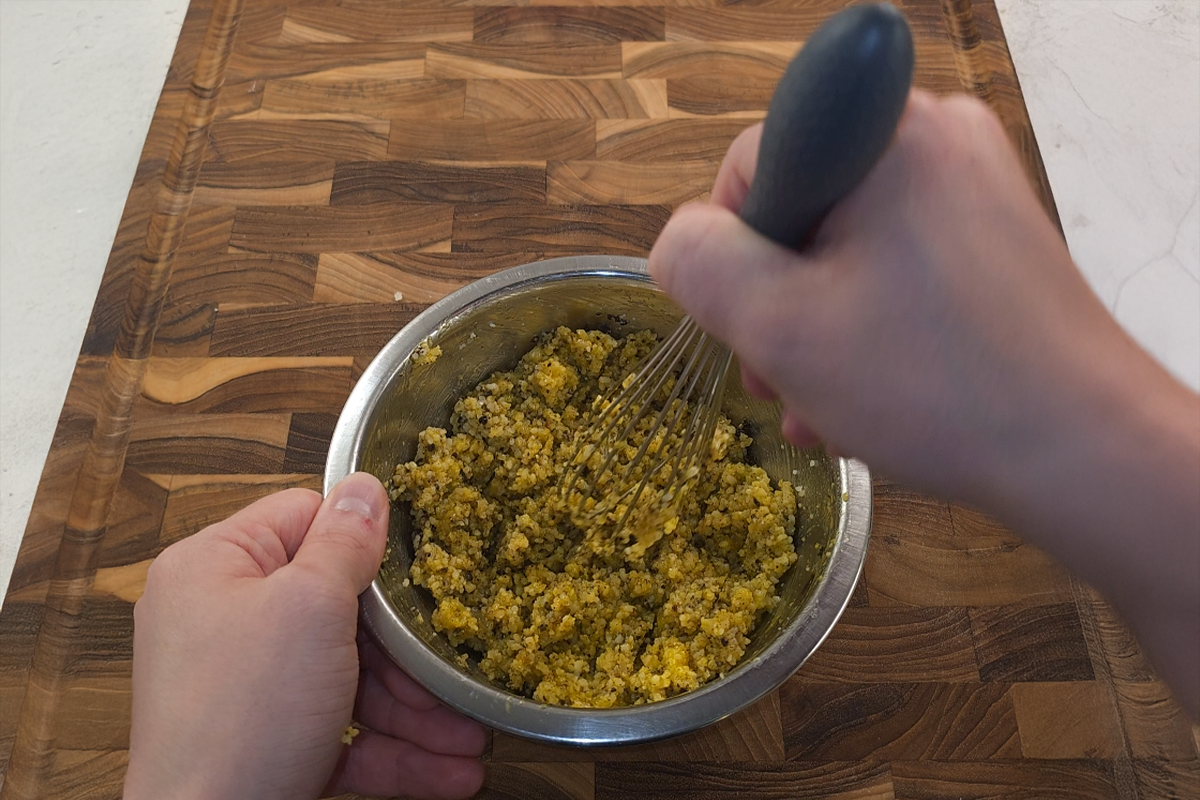
5. Marry The Pasta and Sauce
Now it’s time to sauce it up! Turn the heat to low on the same pan that you just tossed your spaghetti in, and add the egg-cheese mixture you prepared. Using tongs, gently combine the pasta with the mixture so that it begins to melt together. While you are stirring the pasta with the egg-cheese mixture, gently drizzle pasta water bit by bit until your sauce has loosened into a thick, glossy, and silky texture and clings to the noodles. Next, mix 3/4 of your guanciale with the spaghetti so that it is coated and evenly distributed throughout the pasta.
Now add 3/4 of the guanciale and mix it thoroughly with the pasta. Keep a keen eye on your sauce. If your eggs start to scramble in even the slightest way, immediately take the pan off the heat and continue mixing. If you fail to catch any sort of curdling early, you might ruin the sauce!
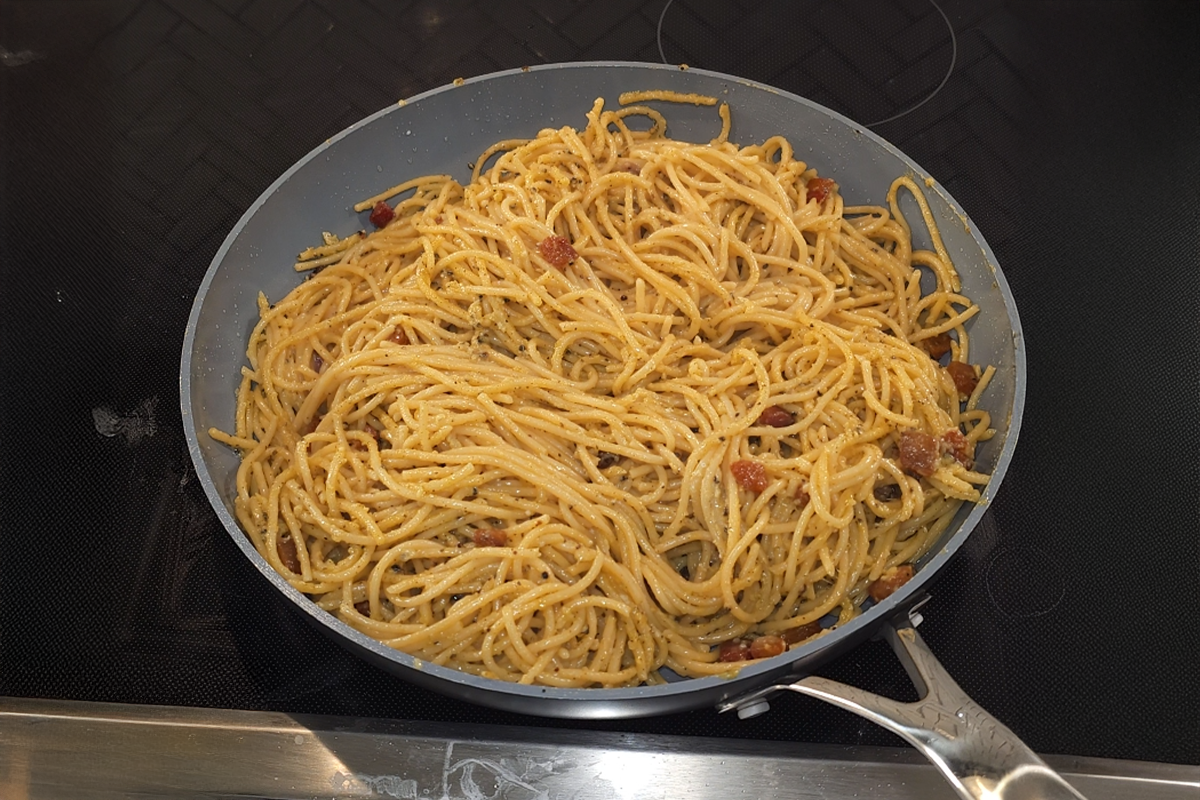
5. Plate and Garnish
Lastly, scoop your pasta into your serving dishes. To garnish, artistically place the remaining 1/4 of guanciale on top of the plated pasta like it’s the Mona Lisa and grate fresh Parmigiano Reggiano on top of each mound of ooey-gooey goodness.
Optionally, sprinkle a pinch of finely diced parsley if you’d like a pop of color. While adding parsley is not technically “authentic,” I think it adds a little personality and differentiation to the dish. Rest assured though, the rest of this spaghetti Carbonara is 100% autentico Italiano.
Otherwise, bravissimo! You’re done. Serve immediately for maximum creamy impact while it is still warm (the longer you wait, the more the sauce solidifies).
What Should I Serve with Spaghetti Carbonara?
- Wine—This dish is best paired with a crisp Sauvignon Blanc or Pinot Grigio, and sides like:
- Arugula salad—the acidic punches of the dressing contrast to the richness of the Carbonara sauce.
- Garlic bread—mop up that decadent sauce (because carbs with carbs? Yes please).
- Roasted broccolini for color and crunch—got to fit those greens in somehow, right?
Storage, Reheating, and Meal Preparation Tips for Carbonara
Any leftover Carbonara can be stored in an airtight container in the refrigerator for up to two days, though it’s best enjoyed fresh. Because this recipe yields about 3–4 servings, I like to divide it into shallow, individual airtight containers for easier reheating later. If you smush it all into one container, it makes it extremely hard to scoop out individual servings without breaking the spaghetti apart.
When you’re ready to reheat, I recommend avoiding the microwave if possible, as it can dry out the pasta and scramble the sauce. Instead, place your serving in a skillet on the stovetop over low heat. Add a small splash of whole cream or milk (not traditional, I know, and yes, nonna might judge), but it helps revive the silky texture of the sauce without completely drying it out. Stir gently and continuously until warmed through.
I do not recommend freezing Carbonara. The egg-based sauce doesn’t hold up well to thawing, and you’ll lose the creamy, luscious consistency that makes it so special. Keep it fresh, keep it simple, and enjoy it while it lasts.
If you tried this Spaghetti Carbonara recipe or any other recipe on my website, please leave a STAR rating and let me know how it went in the comments below!
Watch How to Make Spaghetti Carbonara
Hungry for more? Subscribe to my weekly newsletter and follow my social media channels to stay up-to-date on new recipes!
Authentic 15-Minute Spaghetti Carbonara: Creamy Roman Pasta Perfection







Description
Get ready to twirl into a bowl of authentic Spaghetti alla Carbonara, where crispy guanciale, perfectly cooked spaghetti, and a rich, creamy cheese sauce come together without a drop of cream. It's a quick 15-minute Roman classic that's simple to make, yet tastes like it came straight from an Italian trattoria.
Ingredients
Egg-Cheese Mixture
Instructions
Guanciale
-
How to render your guanciale
- Place your diced guanciale into a cold skillet and set the heat to medium-low. Starting with a cold pan allows the fat to slowly render out while the guanciale becomes perfectly crisp.
- Cook for 8–10 minutes, stirring occasionally, until the edges are golden brown and crispy with a slightly chewy center.
- Transfer the guanciale to a covered bowl and set aside, leaving the rendered fat in the pan. Don't throw it away—that's the secret to an authentic Carbonara sauce.
Spaghetti
-
Cook the spaghetti
- While your guanciale is cooking, bring a large pot of generously salted water to a rolling boil.
- Add the spaghetti and cook until just shy of al dente.
- Before draining, reserve 2/3 cup of the pasta water for the sauce.
- Drain the pasta and immediately toss it in the warm guanciale fat to coat every strand with flavor.
Carbonara Sauce
-
How to make your Carbonara sauce
- While the pasta cooks, toast the whole black peppercorns in a small skillet over low heat for 30–60 seconds until fragrant, then crush them into a coarse powder.
- In a mixing bowl, whisk together the eggs, egg yolks, Parmigiano Reggiano, Pecorino Romano, crushed black pepper, and salt until smooth and creamy.
- Turn the heat to low and pour the egg and cheese mixture over the warm spaghetti.
- Using tongs, continuously toss the pasta while slowly drizzling in the reserved pasta water until the sauce becomes silky, glossy, and coats every noodle.
- Fold in about three-quarters of the crispy guanciale and continue tossing until evenly distributed.
- If the eggs begin to scramble, immediately remove the pan from the heat and continue mixing until smooth.
Garnish
-
Finish and serve
- Divide the Carbonara between serving bowls.
- Top with the remaining crispy guanciale, a generous grating of Parmigiano Reggiano, and a sprinkle of freshly chopped parsley, if desired.
- Serve immediately while the sauce is hot, silky, and creamy. Buon appetito!
Nutrition Facts
Servings 4
- Amount Per Serving
- Calories 986kcal
- % Daily Value *
- Total Fat 55g85%
- Saturated Fat 22g111%
- Cholesterol 260mg87%
- Sodium 1188mg50%
- Potassium 330mg10%
- Total Carbohydrate 87g29%
- Dietary Fiber 4g16%
- Sugars 3g
- Protein 34g68%
- Vitamin A 21 IU
- Vitamin C 0.8 mg
- Calcium 340 mg
- Iron 2 mg
- Vitamin D 1.1 IU
- Vitamin E 1 IU
- Vitamin K 3 mcg
- Thiamin 0.138 mg
- Riboflavin 0.303 mg
- Niacin 2 mg
- Vitamin B6 0.255 mg
- Folate 46 mcg
- Vitamin B12 0.663 mcg
- Pantothenic Acid 1 mg
- Phosphorus 474 mg
- Magnesium 76 mg
- Zinc 2.8 mg
- Selenium 88.5 mcg
- Copper 0.38 mg
- Manganese 1.195 mg
* Percent Daily Values are based on a 2,000 calorie diet. Your daily value may be higher or lower depending on your calorie needs.
Note
KEEPING THE SAUCE CREAMY
The biggest mistake people make with Carbonara is overheating the eggs. Once you add the egg and cheese mixture, keep the heat on low and continuously toss the pasta. If the eggs begin to scramble, immediately remove the pan from the heat and keep mixing. The residual heat from the pasta is all you need to create a silky, creamy sauce.
NO GUANCIALE?
Guanciale is the traditional and most authentic choice for Carbonara, but it can be difficult to find depending on where you live. If your local grocery store or butcher doesn't carry it, pancetta is the closest substitute. Thick-cut bacon also works in a pinch, though it will add a smokier flavor and won't be quite as authentic.
LEFTOVERS
Carbonara is one of those dishes that's best enjoyed fresh, but leftovers can still be delicious. Store them in airtight serving-size containers in the refrigerator for up to 2 days. I don't recommend freezing Carbonara because the egg-based sauce doesn't thaw well and loses its silky texture. When reheating, be sure to reheat in a pan over low heat and add a splash of heavy cream to revive the silkiness of the sauce.